
Sep 9, 2026Technical Articles
Commonly‑Used Materials in Casting
Compare cast iron, cast steel, aluminum, copper, zinc and magnesium alloys. Properties, typical applications and practical material‑selection tips for foundry engineers
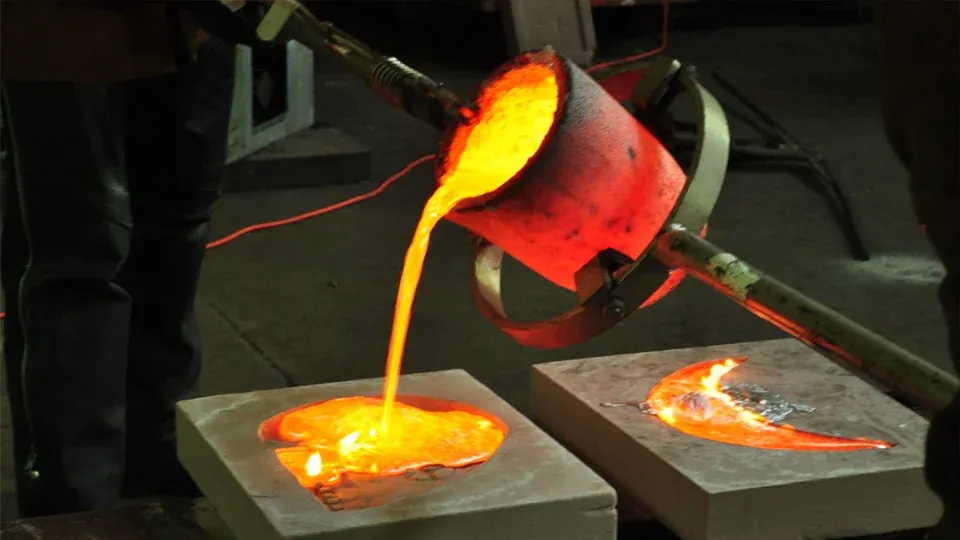
Casting processes can work with a wide variety of metals and alloys. The proper material selection depends on strength, weight, fluidity, corrosion resistance, cost and end‑use conditions. A material with good fluidity may not have the highest strength, while high‑strength materials often require stricter temperature and solidification control.
Cast Iron
Cast iron is one of the most widely adopted casting materials. It delivers good fluidity, relatively low cost, excellent wear resistance and superior vibration‑damping performance. These properties make it suitable for heavy, stable components such as machine bases, housings, pump bodies and engine parts.
Its main advantage is good machinability. Cast iron fills complex mold cavities well and produces heavy‑section parts with great dimensional stability and rigidity. However, strength, toughness and machinability vary among different cast iron grades. Material selection must match the actual load and service conditions of target parts.
Cast Steel
Cast steel is applied where higher strength, toughness or impact resistance is required. Compared with cast iron, cast steel provides better mechanical properties, especially for components under heavy load, impact or pressure.
Nevertheless, casting steel brings higher technical challenges. It has a higher melting point and poorer fluidity than many other casting alloys. Mold design, pouring temperature and solidification control must be handled with great care. Cast steel is widely used for structural components where performance outweighs casting convenience.
Aluminum Alloys
Aluminum alloys are popular in casting thanks to light weight, corrosion resistance and good thermal conductivity. In addition, they feature favorable fluidity, supporting the production of thin‑wall and intricately‑shaped parts.
Lightweight is the core advantage of aluminum castings. It is the preferred choice when manufacturers balance strength, weight reduction and production efficiency. Aluminum castings usually need mechanical machining for tight tolerances, sealing surfaces or precise assembly features.
Copper Alloys
Copper‑base alloys such as bronze and brass are selected when electrical conductivity, corrosion resistance, wear resistance or low‑friction performance are critical. They are frequently used for parts with stable performance requirements for contact motion, rotation, fluid transfer or electrical applications.
Copper alloys are generally more expensive than iron‑based or aluminum materials, so they are not chosen merely for shaping purposes. They are adopted when functional advantages offset higher costs, especially for components demanding durability, corrosion resistance and reliable thermal‑electrical properties.
Zinc Alloys
Zinc alloys are widely used for small‑size castings with high dimensional accuracy and smooth surface finish. Good fluidity and relatively low melting point make them ideal for precision‑component manufacturing.
Zinc castings fit applications where accuracy, appearance and repeatability matter more than high‑temperature strength. They are used for parts without extreme high‑temperature exposure or heavy structural loads.
Magnesium Alloys
Magnesium alloys are valued for ultra‑low density. Lighter than aluminum, they are ideal for applications where weight reduction is the primary design goal.
Meanwhile, magnesium alloys show high chemical activity at high temperatures, so rigorous process control is necessary during casting. They are mainly used for specialized lightweight parts, where performance benefits outweigh extra processing costs.
Casting Material Selection
Material selection is not only about metal types. Engineers also need to evaluate melting characteristics, fluidity, solidification, shrinkage, machinability and service performance. A qualified casting material should satisfy both manufacturing requirements and final functional demands of castings.
In practical production, optimal results come from combining casting with secondary processing. Casting forms the basic geometry; heat treatment, surface finishing or CNC machining further improve mechanical strength, surface quality and dimensional accuracy.
👉To achieve stable casting quality for various alloys, choose our premium fused ceramic sand for your mold production. Check our Fused Ceramic Sand Product Page