
Aug 10, 2026Industry News
Casting Knowledge: Full Guide to 25 Mainstream Metal Forming Processes
25 Mainstream Metal Forming & Casting Processes Complete Guide | Foundry Technology Knowledge
Introduction: Casting, forging, 3D printing and machining are core forming technologies for mechanical parts. This article sorts out 25 mainstream metal manufacturing processes, covering traditional sand casting, special casting, forging, cutting and additive manufacturing. It helps purchasing managers and process engineers distinguish process features quickly for product selection.
- Die CastingNote: Die casting is not short for pressure casting. It is a high-pressure metal forming process. Molten metal is injected into high-strength alloy molds under extreme pressure, similar to plastic injection molding, ideal for mass production of thin-wall, high-precision metal components.
- Sand CastingMolds are made from foundry sand. Wooden or metal patterns are buried and compacted in sand boxes. Split the mold and remove patterns to form cavities, with gating and vent channels reserved for pouring. After cooling, break the sand mold to take out castings.Merits: Low cost, compatible with all metal alloys; Drawbacks: New sand mold needed for every casting, limited surface finish.
- Investment Casting (Lost-Wax Casting)High-precision precision casting including wax injection, wax trimming, tree assembly, refractory coating, dewax baking, metal pouring and post-finishing. Wax patterns are coated with ceramic slurry and baked to melt out all wax. Molten metal fills the hollow ceramic shell to produce castings without draft angles.
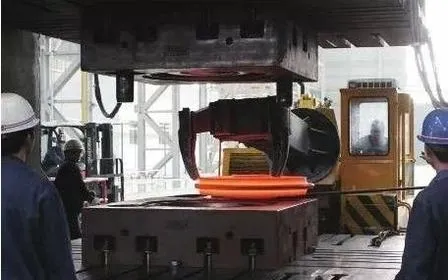
- Die ForgingMetal blanks are pressed into shape by dedicated forging equipment and matched molds, including hammer forging, crank press forging, horizontal forging and friction screw press forging. Roll forging can produce pre-form blanks.Forging advantages: Eliminate casting porosity, optimize internal metallurgical structure and maintain complete metal flow lines. Forged parts have far better mechanical performance than castings under heavy load, widely used for auto and construction machinery key components.
- RollingMetal ingots are extruded between rotating rollers. Hot rolling (processing temperature above recrystallization temperature) and cold rolling (room temperature) are basic processes for plates, bars and tubes.
- Pressure CastingLiquid or semi-solid metal fills mold cavities at high speed under constant high pressure to form dense castings.
- Low-Pressure CastingLow-pressure gas steadily pushes molten metal into molds. Originally used for aluminum castings, now applied to copper, iron and steel high-melting-point alloys.
- Centrifugal CastingMolten metal is poured into high-speed rotating molds and evenly distributed by centrifugal force. Sand molds, shell molds or metal molds are applicable, perfect for pipes, sleeves and circular rotary castings.
- Lost Foam CastingFoam/polystyrene patterns are assembled into clusters, coated with refractory paint, dried and buried in loose dry sand for vibration compaction under negative pressure. Foam vaporizes instantly when pouring molten metal, and liquid metal takes the pattern shape after cooling.Advantages: No parting line, no sand cores, minimal flash and dimensional deviation, near-net-shape forming. Fully compatible with ceramic bead sand dry-sand production lines.
- Squeeze Casting (Liquid Die Forging)Divided into direct and indirect squeeze casting. Molten metal is filled into closed molds and pressed intensively, combining the benefits of casting and forging for superior mechanical properties.
- Continuous CastingMolten metal is poured into a crystallizer continuously, and solidified blanks are pulled out from the other end endlessly to produce unlimited-length plates, pipes and bars with uniform dense microstructure.
- Wire Drawing (Cold Drawing)Metal blanks are pulled through dies with smaller cross-sections under external force for room-temperature plastic forming, applied to precision thin bars, tubes and wires.
- StampingSheets/strips are deformed or cut by press machines and matched dies to manufacture housings, covers and sheet metal parts.
- MIM (Metal Injection Molding)Net-shape powder metallurgy technology. Metal powder mixed with binder is injection molded, then debinded and sintered to produce tiny complex precision parts.
- TurningWorkpieces rotate on lathes while cutting tools machine internal/external cylinders, cones, threads and grooves, the fundamental process for all rotary parts.
- MillingWorkpieces stay fixed while high-speed rotary cutters machine contours, grooves and complex curved surfaces. CNC milling and machining centers support multi-axis processing for molds, turbine blades and special-shaped components.
- PlaningPlaning tools make horizontal reciprocating linear cutting for flat surfaces. Machining accuracy IT7~IT9, surface roughness Ra1.6~6.3μm.
- GrindingAbrasives and grinding wheels remove excess material for finishing, improving dimensional tolerance and surface smoothness after turning/milling.
- SLM (Selective Laser Melting)High-power laser melts metal powder layer by layer inside an inert gas-sealed chamber for metal additive manufacturing.
- SLS (Selective Laser Sintering)Infrared laser sinters pre-heated powder layer by layer. Early applications focus on wax and plastic powder; metal sintering technology is under continuous upgrade.
- Metal Deposition Additive ManufacturingMetal powder, high-power laser and inert shielding gas are delivered simultaneously. It breaks the size limit of powder tanks, suitable for large component manufacturing and repair of damaged precision castings.
- Roll FormingMultiple groups of rollers gradually bend and extrude thin stainless steel sheets step by step to form complex cross-section profiles.
- Die Forging (Simplified Repeat Description)Blanks are formed under mold constraint, featuring precise dimension, small machining allowance, complex structure and high efficiency for mass standard forgings.
- Die CuttingPre-formed thin film materials are punched to remove excess substrate and reserve complete product outlines.
- Rule Die CuttingSpecial steel rule dies cut materials under machine pressure, providing smooth cutting edges, half-cut lines and indentations with low mold cost, easy and safe operation.
Product Guide for Foreign Trade Page
Lost foam casting, resin sand, investment casting and binder jet 3D printing put strict requirements on molding sand performance. Our spherical ceramic sand (ceramsite sand, cerabeads) features low thermal expansion, high refractoriness, excellent reclamation rate and superior flowability. It effectively reduces casting defects including gas porosity, veining and metal penetration. Free samples and technical comparison test are available upon inquiry.