
Sep 14, 2026Technical Articles
Advantages and Limitations of Casting Process
Learn its advantages and limitations on dimensional accuracy, surface finish and casting defects.
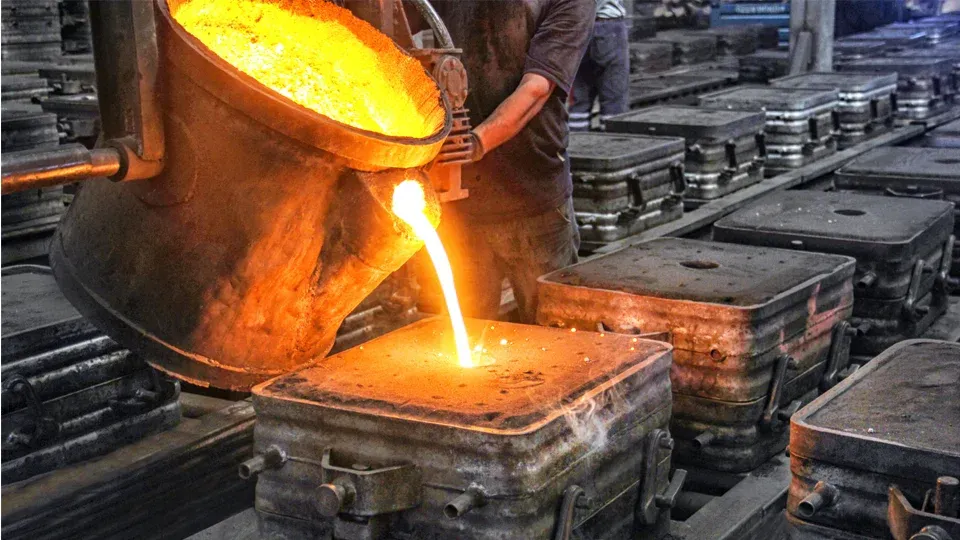
Casting is one of the most widely used metal forming methods in modern manufacturing, offering outstanding flexibility for producing complex industrial components. Its greatest advantages include excellent shape-forming capability, broad material compatibility, reliable size adaptability and cost-effective near-net-shape production. Casting can create intricate structures with internal cavities, ribs and irregular profiles that are difficult or wasteful to machine from solid blanks. It supports various materials such as cast iron, steel, aluminum, copper, zinc and magnesium, covering both lightweight precision parts and heavy-duty mechanical components. With stable process control, casting achieves consistent repeatability and mass production, greatly reducing material waste and overall manufacturing costs.
However, the casting process also has inherent limitations. Due to molten metal shrinkage and solidification characteristics, castings have relatively limited dimensional accuracy and usually require secondary machining for tight-tolerance features, sealing surfaces and assembly structures. Traditional sand casting delivers a rough as-cast surface, requiring additional finishing processes to meet high surface-quality standards. Improper process control may also cause typical defects such as porosity, shrinkage, inclusions and cracks. In addition, precision casting involves high mold investment, making it less economical for small-batch and customized production. Material performance may vary slightly due to uneven cooling and grain structure differences.
Overall, casting remains an indispensable process for complex, large-size and cost-sensitive metal parts. Combining casting with heat treatment and CNC finishing can perfectly balance structural flexibility, production cost and final precision, achieving optimal manufacturing results for most industrial components.